
Wisner Criminal History Checks
Begin at Town Hall for a Wisner police report or Mayor’s Court file. The same published municipal line serves as the practical gateway to both functions. Ask staff which custodian has the record before sending personal data. A town citation may remain in Mayor’s Court, while an arrest for a felony moves to the Franklin Parish prosecutor and Fifth Judicial District Court.
- Call Wisner Town Hall and identify whether the request concerns police or court records.
- Give the full name, event date, location, and report or citation number if known.
- Ask Mayor’s Court for the docket, judgment, or certified disposition in a town case.
- Check the Franklin Parish jail and Clerk for booking and district-court records.
- Use LSP Right to Review only for your own fingerprint-supported Louisiana history.
A Wisner record check may need more than one result. An incident report describes what officers recorded. A booking record shows intake. A court file shows the filed charge and outcome. Those records should not be read as substitutes.
Wisner’s Phone-Based Record System
Wisner had 771 residents in the 2020 Census. Its official access system reflects a small town: no verified records portal, digital docket, public arrest blotter, or special request form was found. Telephone and counter service are the actual official channels, not second-rate fallbacks. The Louisiana Municipal Association lists Town Hall at 9530 Natchez Street, telephone 318-724-6568, and regular weekday municipal hours.
The official Wisner local profile brings the town and police contact together.

Confirm the destination, current hours, fee, and accepted delivery method before mailing a request or traveling.
Records at the Wisner Police Department
The town profile identifies William Beach as police chief and uses 318-724-6568 as the verified contact. Police records can include an incident narrative, arrest report, crash material, and call information. Request the exact item needed. A broad demand for everything about a person can be hard to locate and may sweep in material that law restricts.
Provide a narrow date range, location, involved name, and event number. Ask whether the town needs identification, prepayment, or a written request. State whether an ordinary or certified copy is required. Do not assume the police office keeps a court disposition. Once prosecutors act, the court is the stronger source for the final result.
- Full name and useful alternate spelling
- Date and place of the incident
- Report, citation, or case number
- Specific record and certification needed
- Delivery preference and contact details
Wisner Mayor’s Court Jurisdiction
Wisner uses a Mayor’s Court under Louisiana R.S. 33:441. It handles municipal ordinance violations and qualifying traffic or misdemeanor matters within town jurisdiction. It is not equivalent to Fifth Judicial District Court and does not hold every case involving a Wisner resident or officer. The Mayor’s Court contact is Town Hall, 9530 Natchez Street, 318-724-6568.
The Louisiana Municipal Association profile verifies Wisner’s municipal and Mayor’s Court channel.
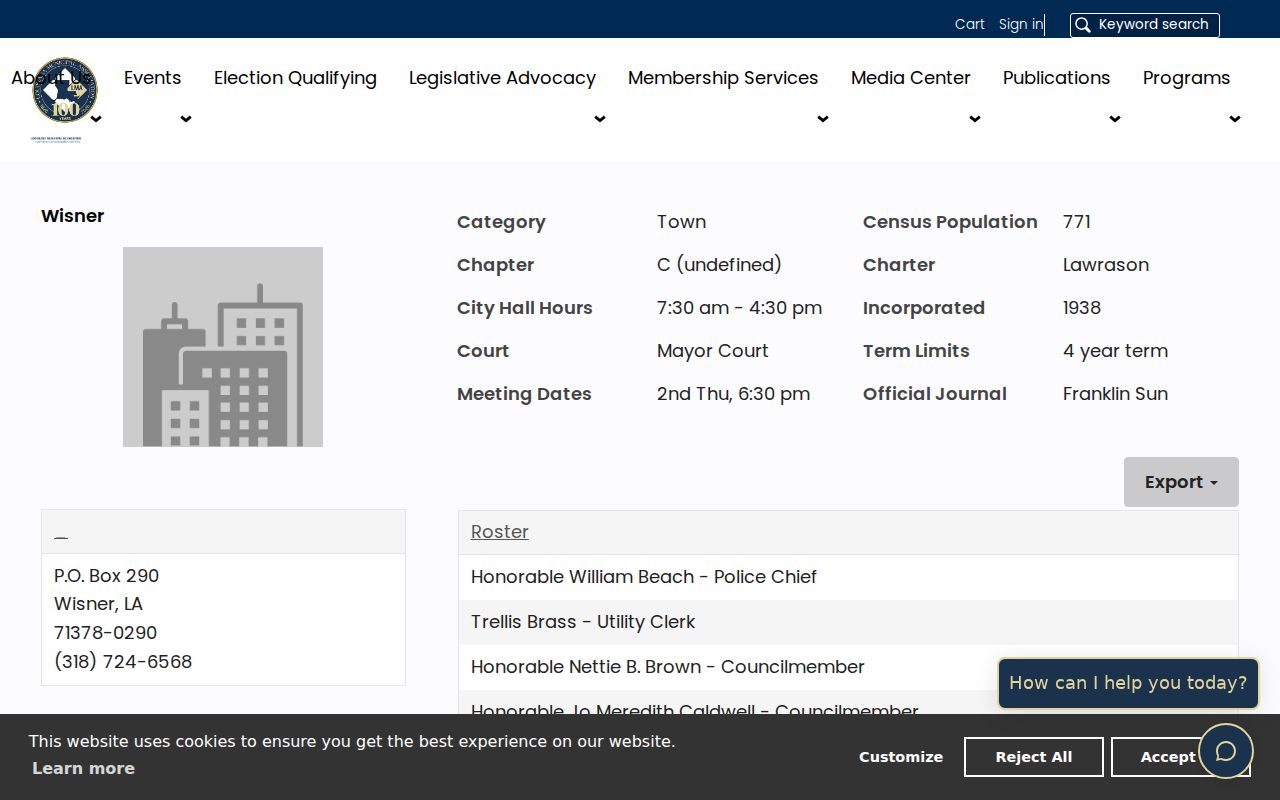
Because no online calendar was verified, call to confirm the session date and records-counter availability.
The Wisner Municipal Court File
Ask for a specific court product. A citation, docket entry, minute record, judgment, and certified disposition serve different needs. If the town cannot locate the matter, check whether it was filed at the parish level.
| Court Name | Wisner Mayor’s Court |
|---|---|
| Case Types Heard | Town ordinance violations and qualifying traffic or misdemeanor matters |
| Case Lookup Channel | Town Hall telephone or counter request; no verified online docket |
| What the Docket Shows | Citation or case number, charge, dates, plea, judgment, sentence, and payment data when recorded |
| Copies & Fees | Confirm availability, certification, copy cost, and payment method with Town Hall |
A certified outcome should come from the court that decided the charge. The Franklin Parish Clerk cannot be assumed to hold a town ordinance file.
Wisner’s Ten-Day Appeal Window
Louisiana R.S. 33:441 provides an appeal from a mayor’s-court conviction to district court when filed within ten days of judgment. That short period makes the judgment date important. Anyone needing to preserve an appeal should contact the court or qualified counsel promptly rather than wait for a public-record request to run its normal course.
An appeal can create records in both places. Mayor’s Court remains the source for its original docket and judgment. Fifth Judicial District Court may hold the later appeal file. Ask for both case numbers so the sequence can be matched.
Booking and Arrest Records in Wisner
Wisner has no verified separate municipal jail roster. A person arrested by Wisner Police is generally routed to the Franklin Parish Detention Center at 388 Natures Acres Road. Use the parish roster or call 318-435-8229 to locate current custody. Treat the roster as a lead because its own warning says it is not an official public document.
Request the incident or arrest narrative from Wisner Police, the booking file from the sheriff or detention center, and the disposition from the correct court. The parish arrest search explains bond, release, and locator limits.
Custody path: Wisner Police › Franklin Parish Detention Center › Mayor’s Court or Fifth Judicial District Court.
Mayor’s Court or Fifth JDC
The arresting agency does not by itself identify the trial court. A town traffic or ordinance matter can stay in Mayor’s Court. A felony charge goes through the Fifth Judicial District Court and the Franklin Parish Clerk. Charges can also change after booking, so the label on an intake record may not match the prosecutor’s filing.
Ask Town Hall first when the document is a Wisner citation. Ask the Franklin Parish Clerk at 318-435-5133 when it is a felony, district docket, or certified district disposition. The Clerk charges $20 for its published criminal-history search and has no verified open public name portal.
How Wisner Records Reach the County
Wisner Police creates the local report. Parish detention staff create the booking entry and fingerprint submission. Mayor’s Court or Fifth JDC creates the adjudication record. A final disposition can then flow into Louisiana’s fingerprint-linked criminal-history system.
Record flow: Wisner Police › Wisner Mayor’s Court or Franklin Parish Courts › Louisiana State Police BCII-LCJIS.
Louisiana is a closed-record state, so LACCH is not an unrestricted public people search. A person obtains their own fingerprint-based history through Right to Review. Public searchers rely chiefly on releasable police files and court records.
Read Wisner Counts Carefully
The official incorporated-place table supplies geographic and population context assigned to Wisner.
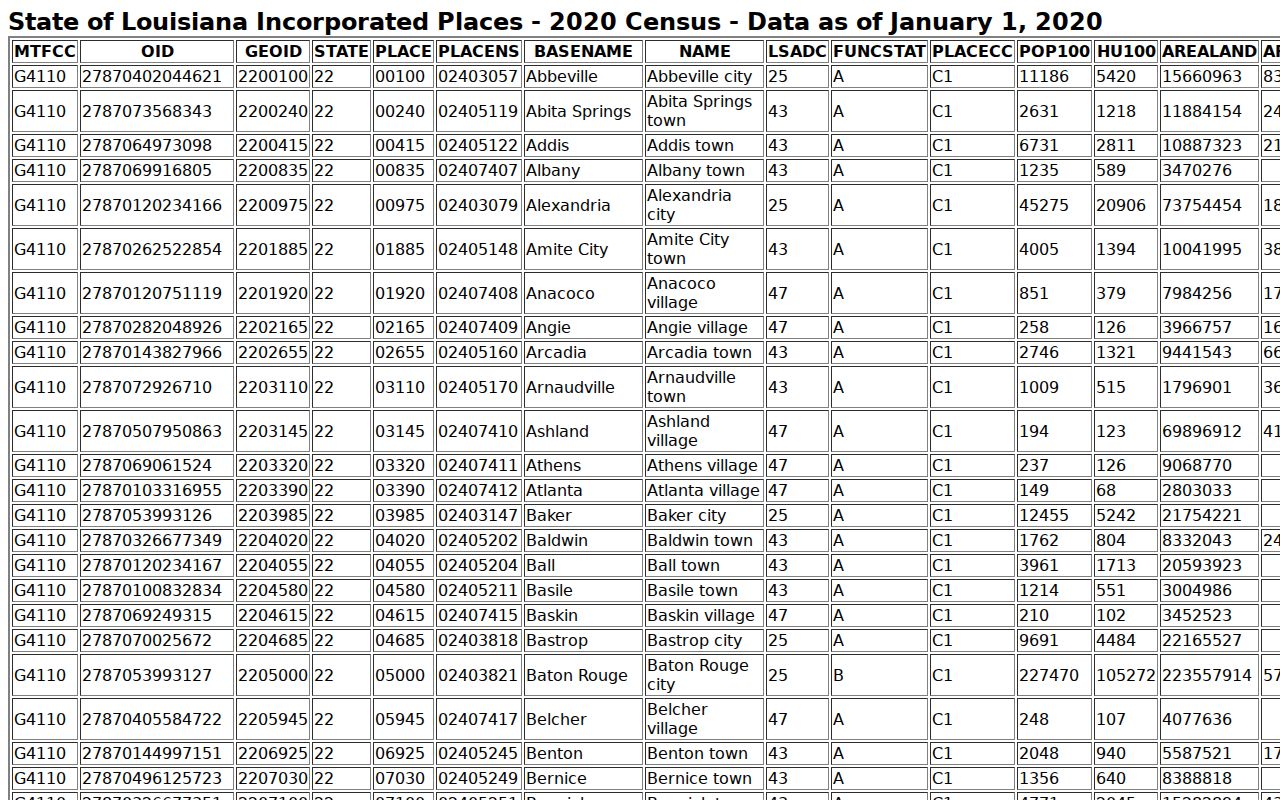
The image description’s stray Gilbert reference does not change the manifest assignment to Wisner. With a small population, one or two incidents can cause a large percentage swing. Any crime statistic should name the reporting agency and year, and incomplete UCR participation should be disclosed.
Wisner Record Access Rules
The Louisiana Public Records Law applies to town records, but exemptions still protect material such as active investigative information, juvenile history, sealed files, and confidential personal data. A custodian may redact a record instead of denying the whole document. Requesters should ask for the legal basis and any reasonably separable public part.
Key Statutes:
Louisiana R.S. 44:1 defines public records and public bodies.
Louisiana R.S. 33:441 establishes mayor’s-court jurisdiction and the appeal rule.
Louisiana R.S. 15:587 limits criminal-history dissemination to lawful channels and purposes.
Verify Wisner Record Matches
Events such as the Wisner Catfish Festival can bring town, parish, and state officers into the same area. That does not support a claim that the festival causes crime. It does show why the agency name matters. If a citation came from a deputy or state trooper, Wisner Police may not be the custodian even though the event occurred in town. Read the agency block before requesting a copy.
When a Louisiana history lacks a disposition, LSP asks the record subject for an original, unaltered certified document. It must match the name, birth date, arrest date within one day, original and amended charges, result, and sentence for each count. Wisner should certify a Mayor court disposition; the Franklin Parish Clerk should certify a Fifth JDC disposition.
LA VINE adds another limited layer. It covers Louisiana incarceration and community supervision and updates about every 24 hours. It does not replace a Wisner police narrative or Mayor court judgment. The telephone locator can provide housing and projected release information with a name plus birth date or DPS and C number.
Compare names, dates, case numbers, and courts before linking a result to a person. An arrest is an allegation. A dismissal is not a conviction. An old roster entry is not proof of current custody. Expunged Louisiana records are made confidential rather than destroyed, so a public result may differ from an authorized agency response.
Before closing a Wisner search, write down each office contacted, the date, the name searched, and the scope of the response. Ask whether the answer covered only current indexes or older paper files as well. A no-record answer from Town Hall means only that its searched system produced no match; it does not clear the parish jail, Fifth JDC, Louisiana custody, or federal court. If the request is denied or redacted, ask the custodian to cite the exemption and release any part that can lawfully be separated. Keep receipts and certification pages with the copy because they help another agency judge its source. For an older matter, use a narrow year range and explain any prior spelling. When a case number is unknown, a citation number, arrest date, and charge can help bridge the police and court indexes. Repeat the same identifiers at each office so the results can be reconciled rather than compared by name alone. This careful log is especially useful in a small town where telephone access is the normal official process and there is no web account preserving the search history.
When reviewing your own Wisner history, obtain official copies from each originating office. Keep the court certification with the disposition so later corrections can be matched to the right arrest cycle.